Best Cyclone Vacuum System for Clean, Clog-Free Airflow
Introduction
These cyclone-based vacuum systems are designed to remove dust and debris before they reach your vacuum’s filter, helping extend filter life and maintain strong suction. The following selections are among the most capable options for workshops, garages, and DIY projects. Each product leverages centrifugal force and neutral-vane technology to maximize separation efficiency and minimize clogs. Below is a quick reference table to compare key attributes of the chosen models.
| Product | Brand | Main Benefit |
|---|---|---|
| Dust Deputy 2.5 Deluxe Cyclone Separator Kit with 10-Gallon Mobile Steel Dust Bin | Oneida Air Systems | High airflow with mobile steel drum |
| Dust Deputy Low-Pro Plus Cyclone Dust Separator | Oneida Air Systems | Low-profile stability and 99.9% dust capture |
| Dust Deputy DIY Anti-Static Retrofit Cyclone Separator | Oneida Air Systems | DIY-friendly retrofit with reduced clogs |
| Dust Collector & Cyclone Separator Kit w/ Clear Bucket, 5-Gal Deluxe | Oneida Air Systems | Clear-bucket visibility with versatile hard-floor use |
| Dust Deputy 2.5 DIY Cyclone Separator XL | Oneida Air Systems | Highest CFM for larger vacuums |
Dust Deputy Low-Pro Plus Cyclone Separator

The Dust Deputy Low-Pro Plus is a compact cyclone designed to extend the life of wet/dry shop vacuums by capturing more than 99.9% of dust before reaching the filter. It uses a low-profile design to improve stability while mounting on standard 5-gallon buckets. The kit includes a 3-foot hose, quick-release accessories, and mounting hardware to simplify setup. Its efficiency helps reduce filter replacements and maintenance while supporting a broad range of workshop materials, including drywall dust, wood shavings, concrete dust, and baking flour.
The model emphasizes higher airflow efficiency, delivering up to 50% more airflow (CFM) than basic lid-style separators. It’s suitable for carpentry, DIY projects, and hobbyist use, with a straightforward install that fits most conventional vacuums. The rugged build aims at longevity, and the included hoses and adapters help create a reliable, airtight connection to existing vacuums.
Dust Deputy DIY Anti-Static Retrofit Cyclone Separator
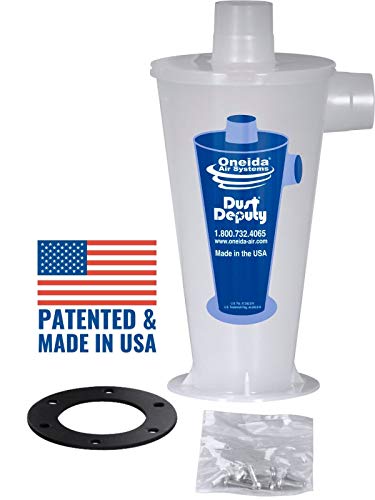
The Dust Deputy DIY Anti-Static Retrofit Cyclone Separator provides a retrofit option to add cyclone separation to existing shop vacuums. It emphasizes increased suction power through Neutral Vane Technology and captures up to 99.9% of dust before it reaches the filter. The design helps protect the vacuum’s motor and filter from clogging, reducing the frequency of filter changes. It works with a wide range of materials—from wood dust to baking flour, plastic granules, and metal shavings—making it versatile for both woodworking and household projects.
Key advantages include compatibility with different makes and models, a tapered 2.0″ port system for secure hose fittings, and a simple assembly that minimizes setup time. The unit is built to extend vacuums’ lifespans by maintaining cleaner filters, contributing to lower long-term maintenance costs and less downtime during projects.
Dust Collector & Cyclone Separator Kit w/ Clear Bucket (Deluxe 5-Gal)
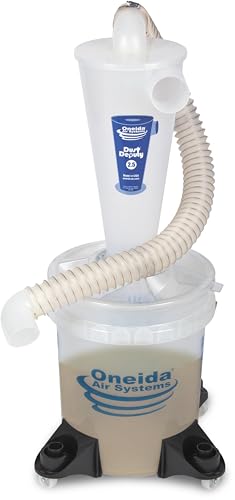
This cyclone separator kit uses centrifugal force to capture and remove 99% of dust before it reaches the vacuum’s filter. Neutral-vane technology improves separation efficiency by about 20%. The package includes a 5-gallon bucket with a lid, on-board accessory storage, 4 caster wheels, a 4.5-foot vacuum hose with swivel cuffs, a tether kit, and a pre-cut neoprene gasket. It’s versatile for materials like drywall, wood dust, baking flour, grass, pet hair, soot, metal shavings, and more. For hard floors, this setup delivers optimal results and helps keep dust contained in a portable system.
The clear bucket variant offers visibility into the separation process, aiding users in evaluating when to empty the bucket. Mobility is enhanced by caster wheels, making it easier to move the unit around the workshop. It’s compatible with many shop vacuums and provides a practical balance of performance and portability for both home workshops and construction sites.
Dust Deputy 2.5 DIY Cyclone Separator XL

The Dust Deputy 2.5 DIY Cyclone Separator XL is designed for today’s larger, more powerful vacuums. It delivers up to twice the airflow of smaller cyclones and lid-style separators, with inlet/outlet ports sized for common shop vacuum hoses. The system features a 2.5″ hose cuff design for easy connections, and a stable caster-based base supports heavy dust loads in the included 10-gallon steel drum. The unit’s cyclone action reduces clogging and suction loss, helping to maintain consistent performance over longer work sessions.
Users benefit from longer filter lifespans due to decreased particulate load on the vacuum’s filter. The XL edition is particularly suited for heavy-duty woodworking, garage cleanup, and other applications generating substantial dust or debris. The combination of portability, robust construction, and high airflow makes it a solid option for demanding shop environments.
Buying Guide: Key Considerations For Selecting A Cyclone Vacuum System
Choosing the right cyclone vacuum system depends on workshop size, dust types, and existing vacuum equipment. Consider these perspectives to find a model that aligns with your needs:
- Dust capture efficiency: Look for models that claim 99% or higher capture before reaching the vacuum filter. Higher efficiency reduces filter wear and maintenance.
- Airflow and compatibility: Ensure the system provides sufficient airflow (CFM) for your vacuum’s capacity and that inlet/outlet sizes match your hoses (commonly 2.0″ to 2.5″).
- Portability vs. capacity: Larger drums (5–10 gallons or more) reduce emptying frequency but add weight. Consider caster wheels and overall weight for your workspace layout.
- Materials and debris range: If you frequently handle fine powders (drywall dust, plaster) or heavier debris (metal shavings), verify the unit handles both without clogging or breakdowns.
- Maintenance and longevity: Features like quick-release lids, gasket quality, and anti-static designs help minimize clogs and extend vacuum life.
- Installation complexity: DIY retrofit kits offer flexibility but may require more assembly time. Preassembled kits provide faster setup with integrated hardware.
- Floor usage: Some systems perform best on hard floors; others are versatile across surfaces. Clarify your primary work environment to choose appropriately.
- Safety and materials: Anti-static variants can reduce risk in environments with conductive dust or fine particulates. Assess needs for your specific projects.
- Cost of ownership: While initial investment matters, factor in the long-term savings from reduced filter changes and less downtime.
In short, pick a model that balances high separation efficiency, ease of use, and compatibility with your existing shop tools. For multi-material workshops or frequent heavy dust tasks, higher-capacity, robustly built units with clear visibility or fast-disconnect features provide meaningful workflow benefits.