Best Sanders With Vacuum for Cleaner Drywall, Wood, and Finishes
Sanding projects can create a cloud of dust if you’re not using a vacuum-equipped sander. This guide highlights the best sanders with built-in or attachable vacuum systems that help keep workspaces cleaner and reduce cleanup time. Each product below offers different power levels, dust-control options, and reach, so you can choose the right tool for DIY projects or professional jobs.
| Product | Brand | Key Vacuum Feature | Power (amps / W) | Common Use |
|---|---|---|---|---|
| Skil 5” Random Orbital Sander SR211601 | Skil | Cyclonic dust box with easy-empty container | 2.8 A | Smoothing and finishing on wood, plastics |
| Skil Corded Multi-Function Detail Sander SR232301 | Skil | Micro-filter dust box with vacuum-ready port | 1.2 A | Fine finishing on corners, edges, contours |
| GEVEELIFE Drywall Sander | GEVEELIFE | Built-in vacuum dust collector; 10-hole sand disc | 880 W (about 1.18 HP) | Drywall, ceilings, walls with high dust control |
| IMQUALI Drywall Sander (Blue) | IMQUALI | Auto dust vacuum system with extendable handle | 8 A | Popcorn ceilings, walls, ceilings with reach |
| BOSCH ROS20VSC Palm Sander | Bosch | Integrated dust collector and soft carrying bag | 2.5 A | General sanding with dust control on flat/contoured surfaces |
Below are five detailed product sections. Each entry includes a clickable Amazon link, an image, and a concise overview of why it stands out for vacuum-assisted sanding jobs.
Skil 5” Random Orbital Sander SR211601

The SR211601 uses a 2.8-amp motor delivering up to 13,000 OPM, suitable for smoothing wood and composite surfaces. Its cyclonic dust box relies on airflow to separate dust from the air, helping maintain a clearer work zone. The variable speed control lets you dial in the right amount of aggressiveness for different materials, reducing gouging and burn marks on finishing work.
Skil Corded Multi-Function Detail Sander SR232301
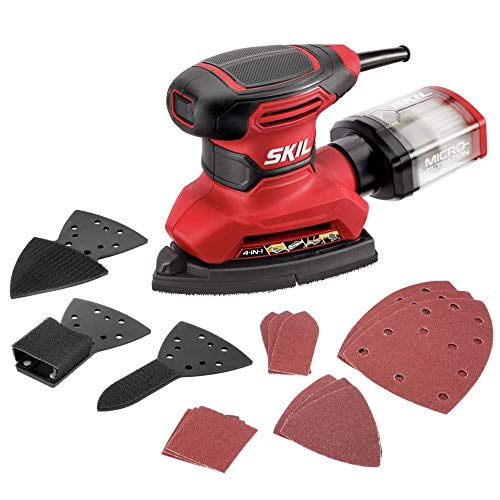
The SR232301 is a 4-in-1 detail sander that includes three extra detail attachments for precise corners and contours. It operates at up to 13,500 OPM from a 1.2-amp motor, making it suitable for intricate finishing tasks. Its micro-filtration system plus a 1-1/4″ dust port helps align with a vacuum attachment for cleaner operation across complex surfaces.
GEVEELIFE Drywall Sander (8–Amp, 880W)

GEVEELIFE pairs a robust 880W copper motor with a seven-speed range of 1000–2100 RPM. A built-in vacuum dust collector captures up to 98.5% of dust when used with the included 10-hole sanding discs. Its 360° rotating disc and 120° pivoting pole offer maximum reach into corners and ceilings, while a bright LED light improves visibility on darker surfaces.
IMQUALI Drywall Sander (Blue) With Extendable Handle
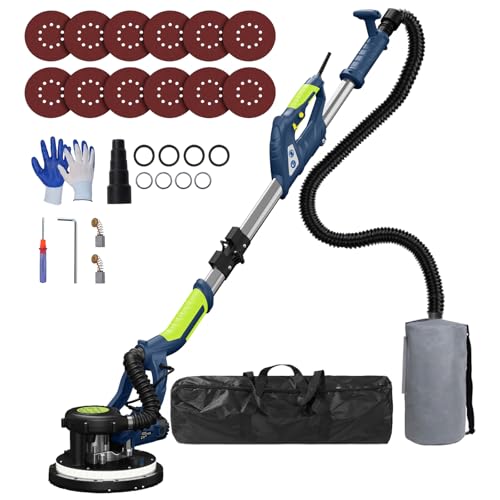
This upgraded popcorn ceiling removal tool features an 8-amp copper motor and a seven-level variable speed control from 800 to 1800 RPM. Its auto dust vacuum system and a 10-hole sanding disc design provide strong dust capture for cleaner work sites. A retractable extension rod extends from 3.9 to 5.5 feet, making it easier to work at multiple ceiling heights while keeping weight manageable at roughly 10 pounds for Sander plus attachments.
BOSCH ROS20VSC Palm Sander 2.5 Amp
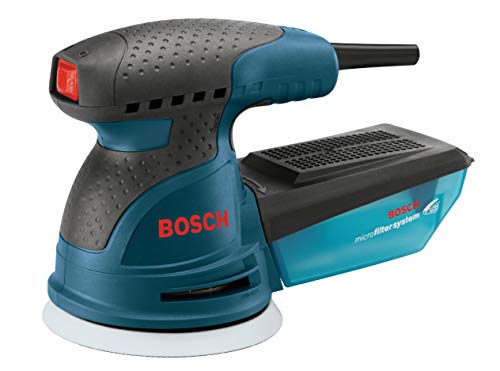
The Bosch ROS20VSC uses a pad dampening system to reduce swirl marks and features a Hook-and-Loop disc attachment for quick changes. The 2.5-amp motor provides a no-load OPM range of 7,500–12,000, and a compact height helps users reach tight work areas. The integrated dust collection improves visibility and minimizes cleanup after finishing tasks on both flat and contoured surfaces.
Buying Guide: Key Considerations For Vacuum Sanders
Choosing the right sander with a vacuum involves balancing power, dust control, reach, and comfort. First, consider the material you’ll sand most often. Wood finishes typically require mid-range speed and a fine sandpaper grit to avoid gouges, while drywall or popcorn ceiling work benefits from higher reach and strong dust capture.
Power and speed range matter: higher amperage motors generally deliver more consistent performance, but for detail work a lighter, more maneuverable tool with effective dust collection can be preferable. A variable-speed control helps tailor aggression to the surface.
Dust collection is essential for indoor projects. Built-in vacuums, micro-filters, or vacuum-ready dust ports connect with shop vacuums to keep the work area clean and reduce airborne particles. Check the disc attachment system and disc pattern (Hook-and-Loop versus press-on) for easy changes and reduced clogging.
Ergonomics and reach influence long-term comfort and project scope. Look for lightweight designs, comfortable grips, and extensions that reach ceilings or high walls without excessive strain. A bright LED light can improve visibility, especially in corners or shaded spaces.
Durability and accessory availability matter for ongoing use. Manufacturer-specific accessories like sanding sheets, detail attachments, and replacement dust bags should be readily available. Finally, consider whether you need a model that doubles as a multi-function sander for versatility across tasks.