Best Vacuum Control Switches for Safer, Smarter Tooling Setups
Choosing the right vacuum control switch can prevent overloads, reduce dust, and streamline tool workflows. This guide highlights five top-rated options designed for woodworking, carpentry, and shop environments. Each model offers load sensing, auto on/off modes, and built-in delays to balance power and safety. Read on to compare features, setup options, and practical considerations for upgrading your dust collection system.
Product Snapshot
| Product | Brand | Key Features |
|---|---|---|
| Automatic Vacuum Switch, Ortis Dust Control Autoswitch for More Power Tools | Ortis | Two tool outlets, auto/off/on modes, adjustable actuation threshold, 3/7/10s shutoff delay |
| Automatic Vacuum Switch, Ortis Vacuum Switch for More Power Tools | Ortis | Two tool outlets, auto/off/on modes, 1s/7s auto delay, easy install options |
| SENCTRL Automatic Vacuum Switch for Power Tools | senctrl | Manual/auto modes, 14AWG cord, 30A rated, 1s start delay, 7s shutdown delay |
| KTNNKG Automatic Remote Vacuum Switch | KTNNKG | Load sensing, 1s/7s delay, remote control, 120V/15A |
| O’SKOOL Automatic Vacuum Switch | O’SKOOL | Automatic turn-on, 10s off delay, flame-retardant shell, UL-certified parts |
Ortis Auto/On/Off Switch With Two Tool Outlets
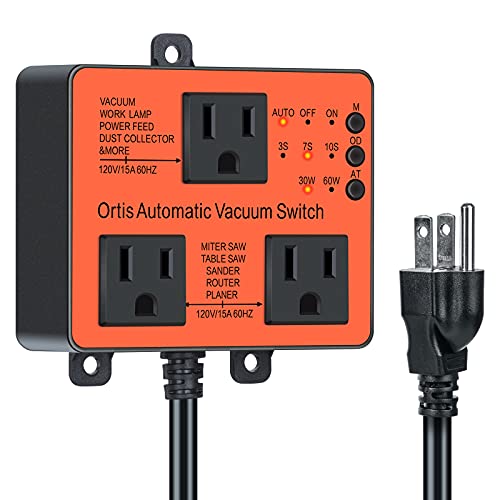
The Ortis solution adds two power tool outlets, reducing clutter and eliminating the need for extra extension cords. It offers three vacuum run modes—Auto, Off, and On—and LED indicators clearly display the current setting. A configurable actuation threshold lets you set 30W or 60W to match your actual tool power draw, helping prevent the vacuum from running longer than needed. The included delay options (3s/7s/10s) extend cleaning after tools stop, improving dust clearance and reducing noise in the workspace.
Ortis Two-Outlet Vacuum Switch With Auto Delay

This Ortis model emphasizes two fixed tool outlets and auto-delayed operation. The system supports automatic delay features that start the vacuum with a controlled lag and extend running time after tool shutdown, which helps maintain cleaner air and a more consistent dust collection cycle. It’s designed for straightforward installation, with practical mounting options to suit a busy workshop environment.
SENCTRL Auto Vacuum Switch With Load Sensing

The SENCTRL AVS3000 combines load sensing with manual and automatic modes, providing robust overload protection via a flame-retardant PC+ABS enclosure and a UL-certified 14AWG power cord. A 1-second start delay prevents simultaneous power-on surges, while a 7-second shut-off delay ensures thorough debris clearing. This model suits demanding shop environments where reliability and safety are priorities.
KTNNKG Remote Automatic Vacuum Switch

KTNNKG offers a remote-controlled, load-sensing switching experience. The remote allows instant power on/off, while the system features a 1-second delay and a 7-second off-delay to clear debris gradually after tool shutdown. This setup supports efficient workflow management from a distance, ideal for larger shops or setups with multiple machines.
O’SKOOL Automatic Vacuum Switch For Power Tools
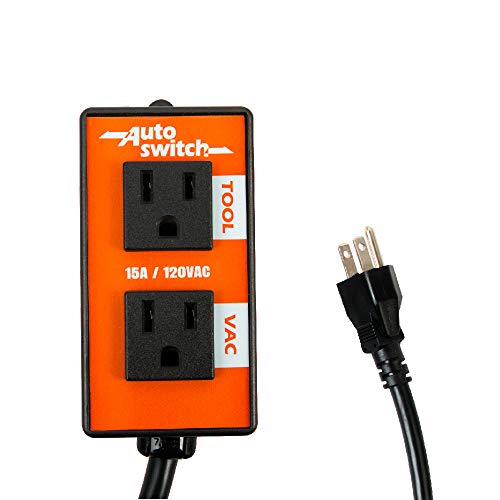
The O’SKOOL model focuses on safe, automatic operation. It activates the vacuum when a tool starts and includes a 10-second delay to turn off, allowing pipe cleaning and debris removal after work ends. The unit uses UL-certified components and a flame-retardant shell, prioritizing safety in busy workshop environments.
Ortis Smart Current Sensing Vacuum Switch

Ortis’ latest entry integrates smart current sensing to minimize overload risk. In Auto mode, the vacuum starts with a short delay when the tool is in use and shuts off after a controlled delay, optimizing power use and keeping the workspace quieter and cleaner during woodworking tasks.
Buying Guide: Key Purchase Considerations
When selecting a vacuum control switch, consider the following factors to match your workshop setup and tools:
- Number of tool outlets: If you run more than one tool simultaneously, models with two outlets reduce cord clutter and simplify wiring.
- Delays and timing: Start and shut-off delays (1s, 3s, 7s, 10s) affect dust clearance and noise. Choose delays based on the typical cycle time of your tools and dust collection needs.
- Load sensing vs. fixed switches: Load sensing detects heavy startup surges and can prevent tripping, but may cost more. Fixed-delay models are simpler and often sufficient for single-tool setups.
- Mode options: Auto, On, Off modes provide flexibility for manual control when needed, as well as automatic operation tied to tool activity.
- Safety and build quality: Look for UL-certified cords, flame-retardant enclosures, and durable housings for long-term reliability in shop conditions.
- Installation ease: Fixing methods (screws, adhesive mounts) and included mounting accessories influence how quickly you can deploy the switch.
- Compatibility with your dust collector: Verify amperage and wattage ratings align with your vacuum or dust collector’s requirements to avoid overloads.
How to Choose for Your Workshop
- Small shops with a single powerful tool may prefer a compact auto-on/off switch with a single outlet and a clear delay setting.
- Medium to large shops can benefit from two-outlet Ortis or SENCTRL models that control multiple tools and offer robust overload protection.
- If you frequently run heavy-duty saws or planers, prioritize load sensing and longer off-delays to minimize debris during tool ramp-up.
- For users who want remote control or hands-free operation, KTNNKG’s remote-enabled models add convenience and safer operation away from the switch.
- Always confirm electrical ratings (voltage, current, and warranty) match your equipment and local electrical codes.